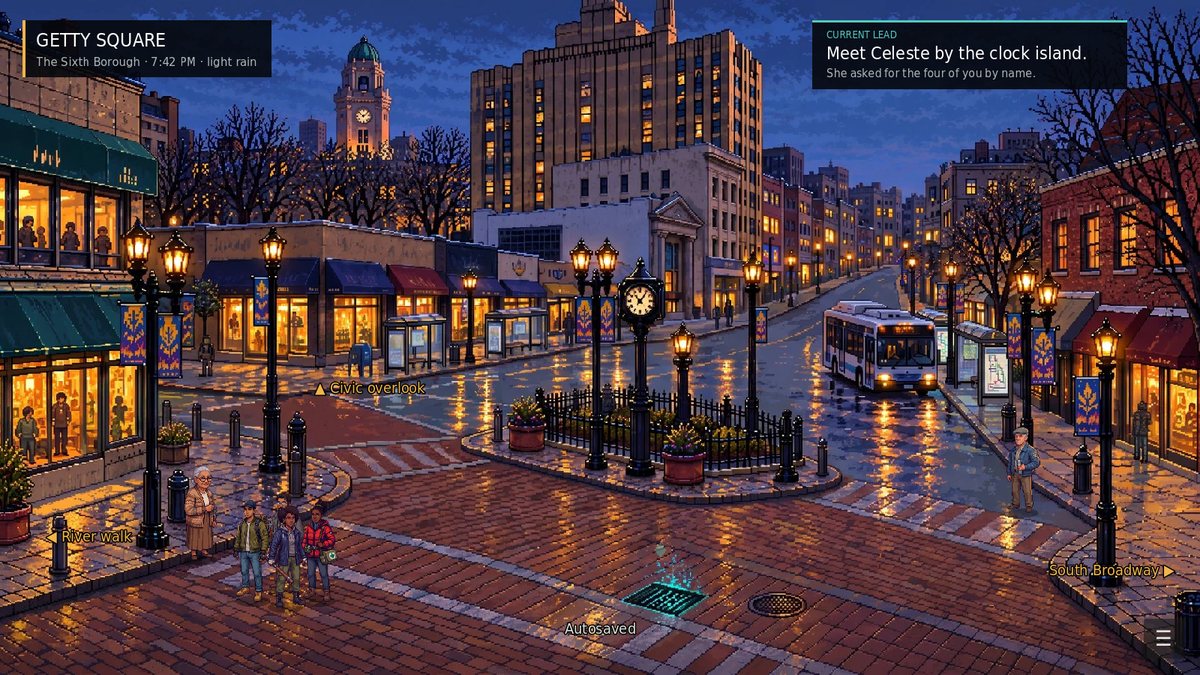
Classic view
Walk a party of four through painted scenes, tap where to go, and fight on a tactical grid where position and cover matter.
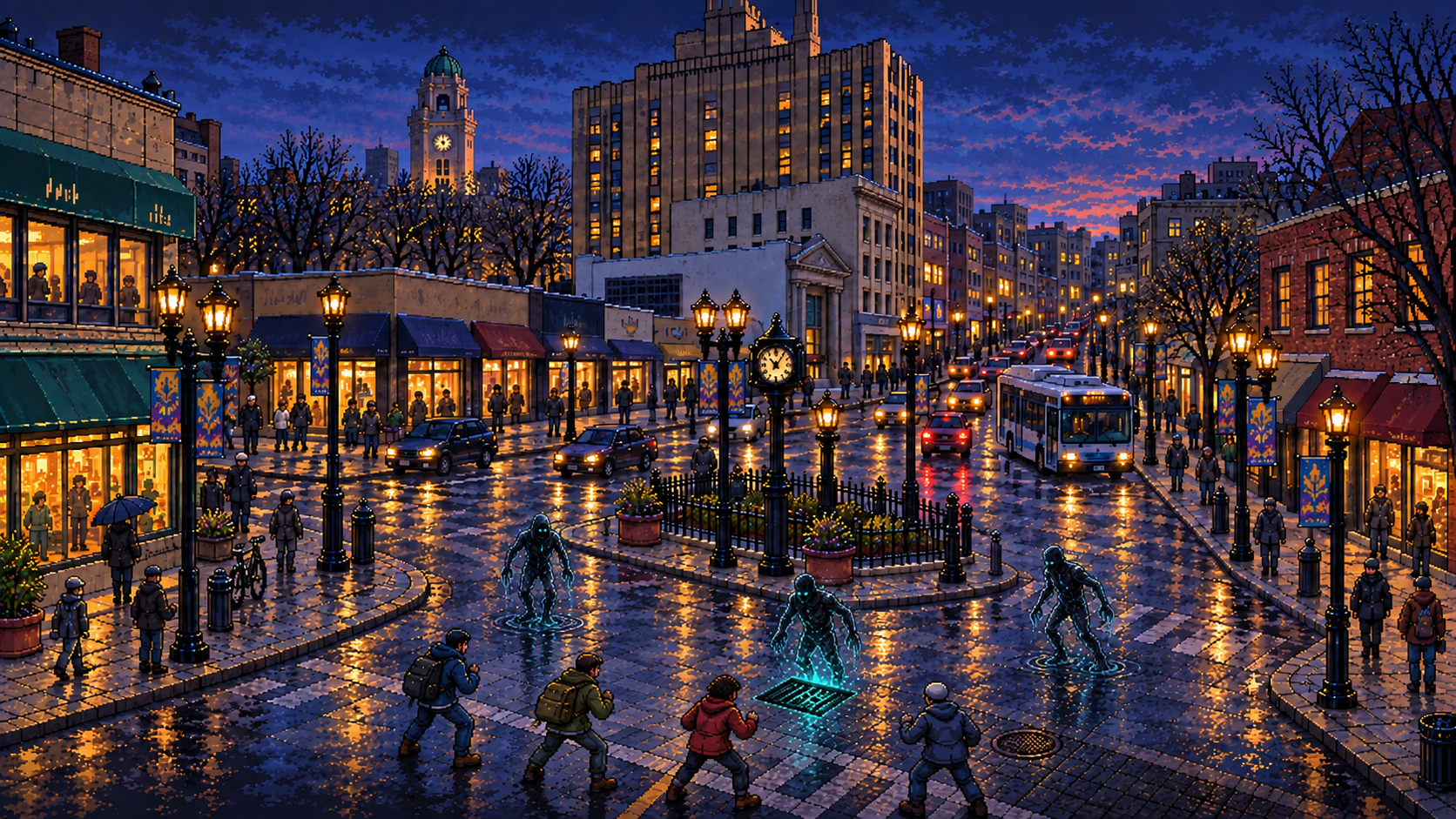
Getty Square · Yonkers, NY · after dusk
An old-school, party-based urban-fantasy RPG where neighborhood rumors lead to tactical battles beneath Yonkers and the Bronx.
Playtest chapter live now · 30–45 minutes in your browser
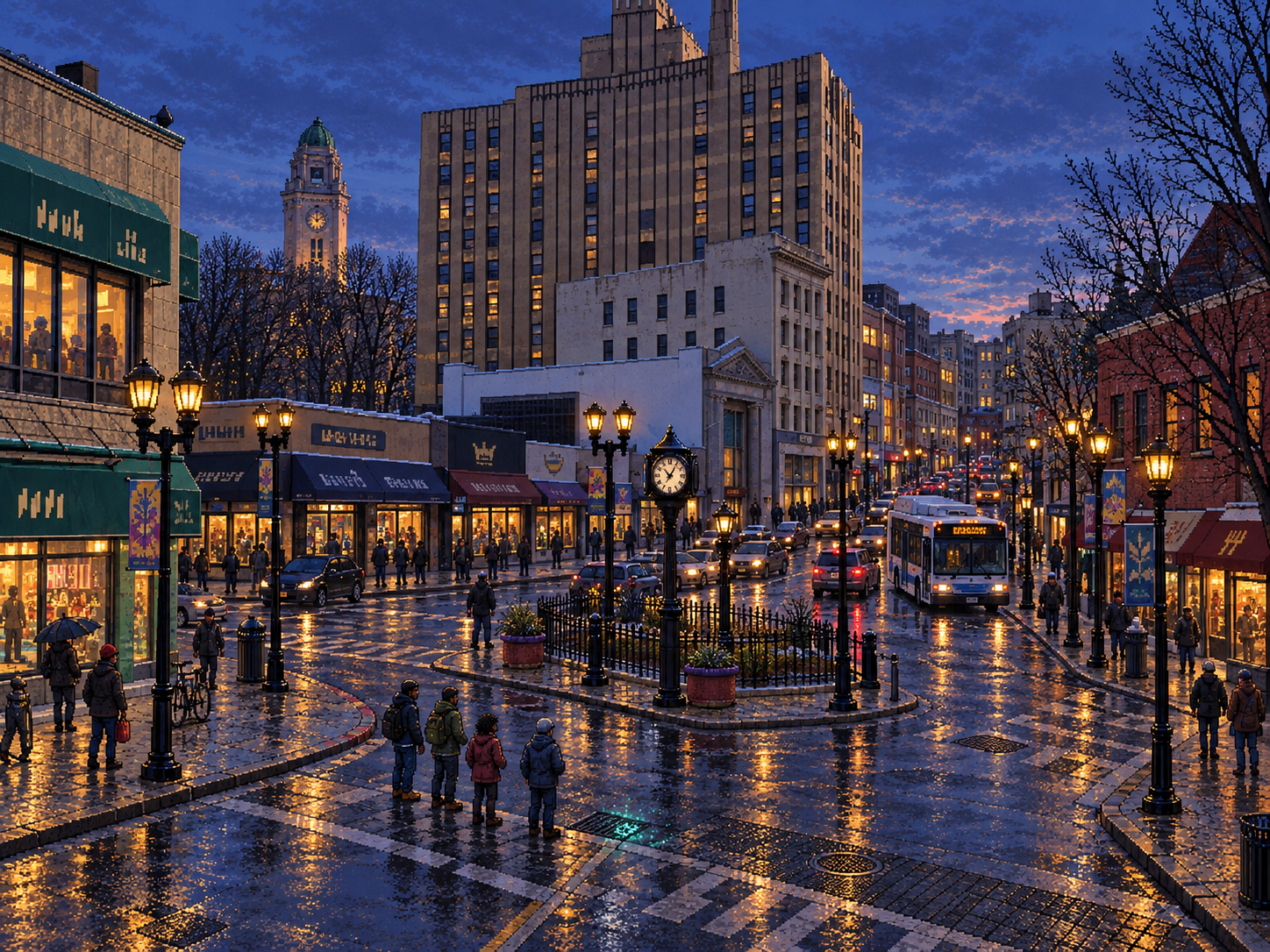
Reference-informed AI preproduction concept — geography and landmarks grounded in Getty Square photos
Playtest build · Godot · desktop, phone or controller
A full 30–45 minute chapter: meet Celeste at the clock island, follow two of three neighborhood leads, face the creatures at the service door (or talk your way past), delve the tunnels under the square, and decide what happens to the Undertow. Progress autosaves on every screen.
Play the chapter Give playtest feedback
Keyboard: WASD or arrows to move, E to interact, J for the journal. Controller: stick, A, B, Start. Phone: tap where to go and tap people or glowing markers.
Playtest · same story, two styles
The same chapter (the same people, leads, checks, fights and endings) in two styles. Play the one you're sent, or both, and tell us which felt better.
Walk a party of four through painted scenes, tap where to go, and fight on a tactical grid where position and cover matter.
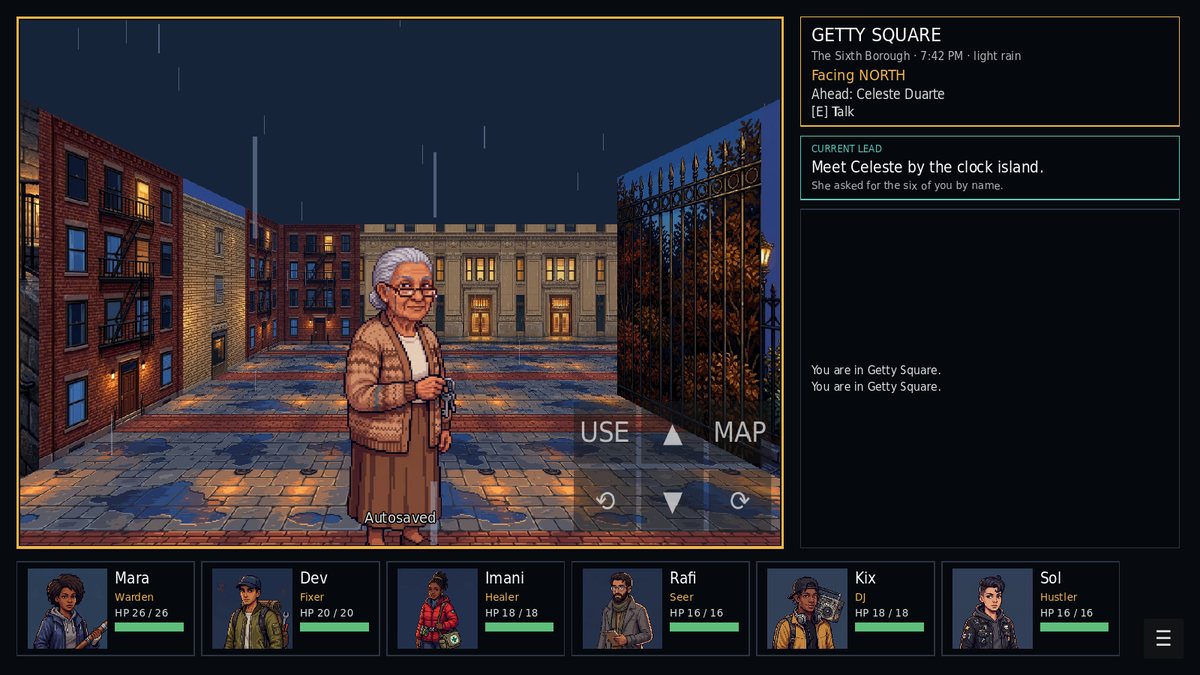
The old-school way: step through the city one square at a time, map it as you go, and lead a party of six (with Kix the DJ and Sol the hustler) in round-by-round menu combat.
Playable prototype · Yonkers → Bronx
Pick any of the four areas below, or start in Getty Square and investigate the turquoise light near the clock island. Each victory leads on to the next area: a bus to Van Cortlandt/Kingsbridge, a bus to Fordham/Belmont, then a walk to the Bronx River. Every area’s full map is in the area atlas.
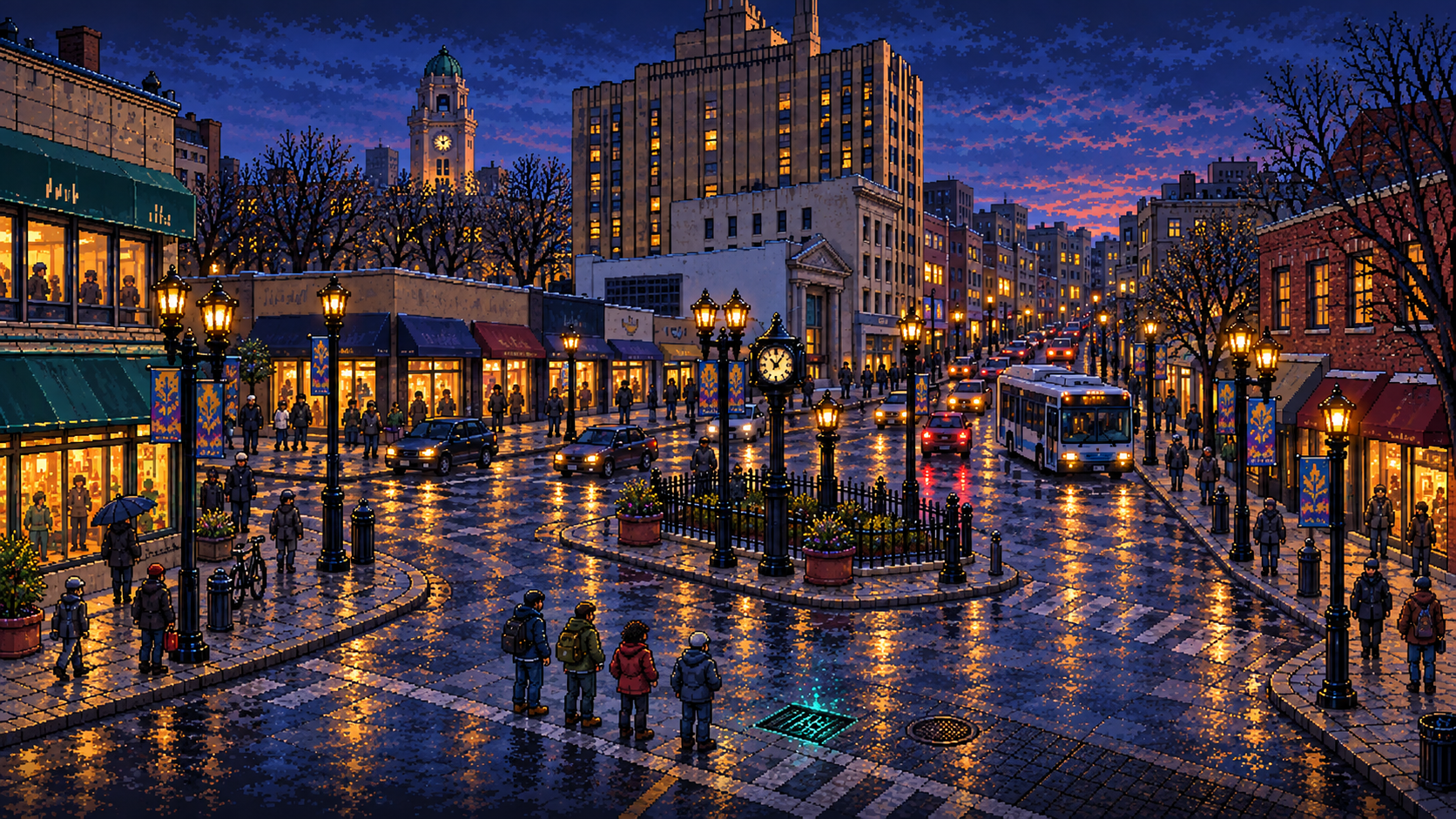
Click the scene, then use WASD or arrow keys.
For now.
Move: WASD / arrows / buttons · Interact: E / Enter
Prototype scope: four small exploration spaces and four encounters within Yonkers and the Bronx. All four areas use reference-informed preproduction art. Art remains preproduction; this is a feel test, not the full vertical slice.
Area atlas · every playable area
Each area added to the prototype appears here in full: the complete, uncropped area map with its start point, walkable ground, clue, and encounter marked, plus how you get there and what you find.
Yonkers · start hub · playable
AParty start
BStorm drain clue
CEncounter
The Bronx · park edge · playable
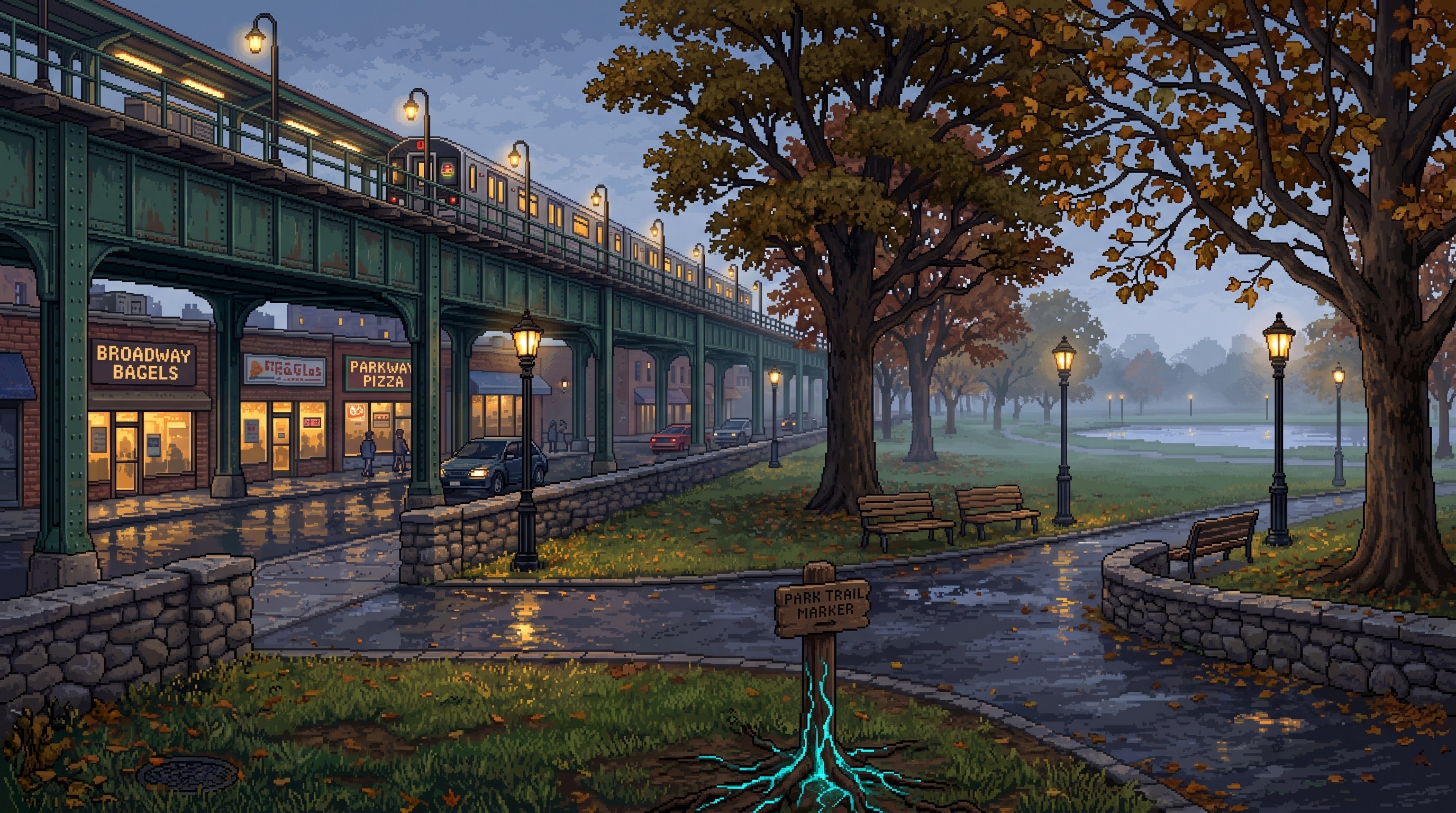 ABus drop-off
BRootbound trail marker
CEncounter
The Bronx · market street · playable
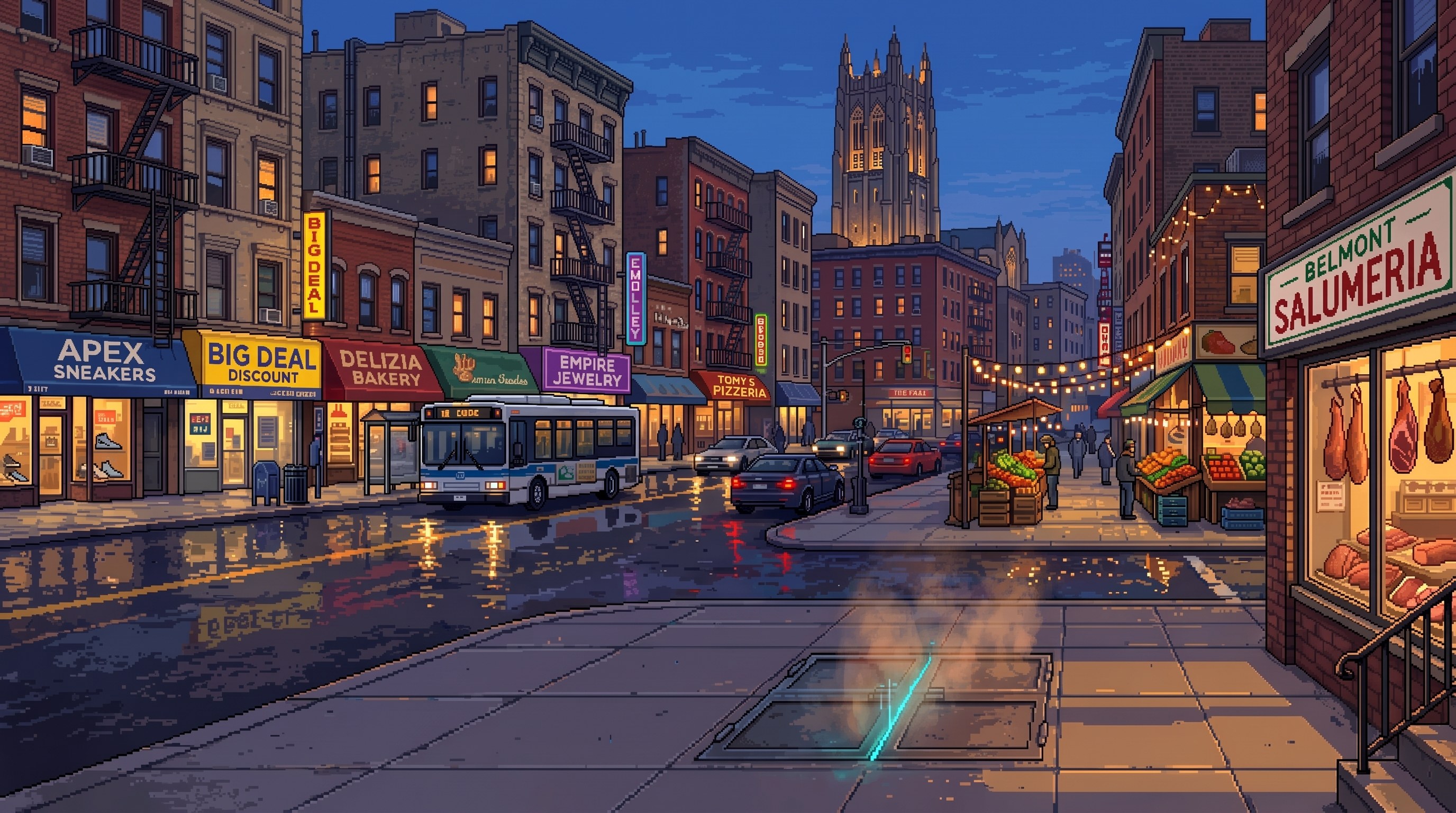 ABus stop
BSteaming cellar doors
CEncounter
The Bronx · river forest · playable
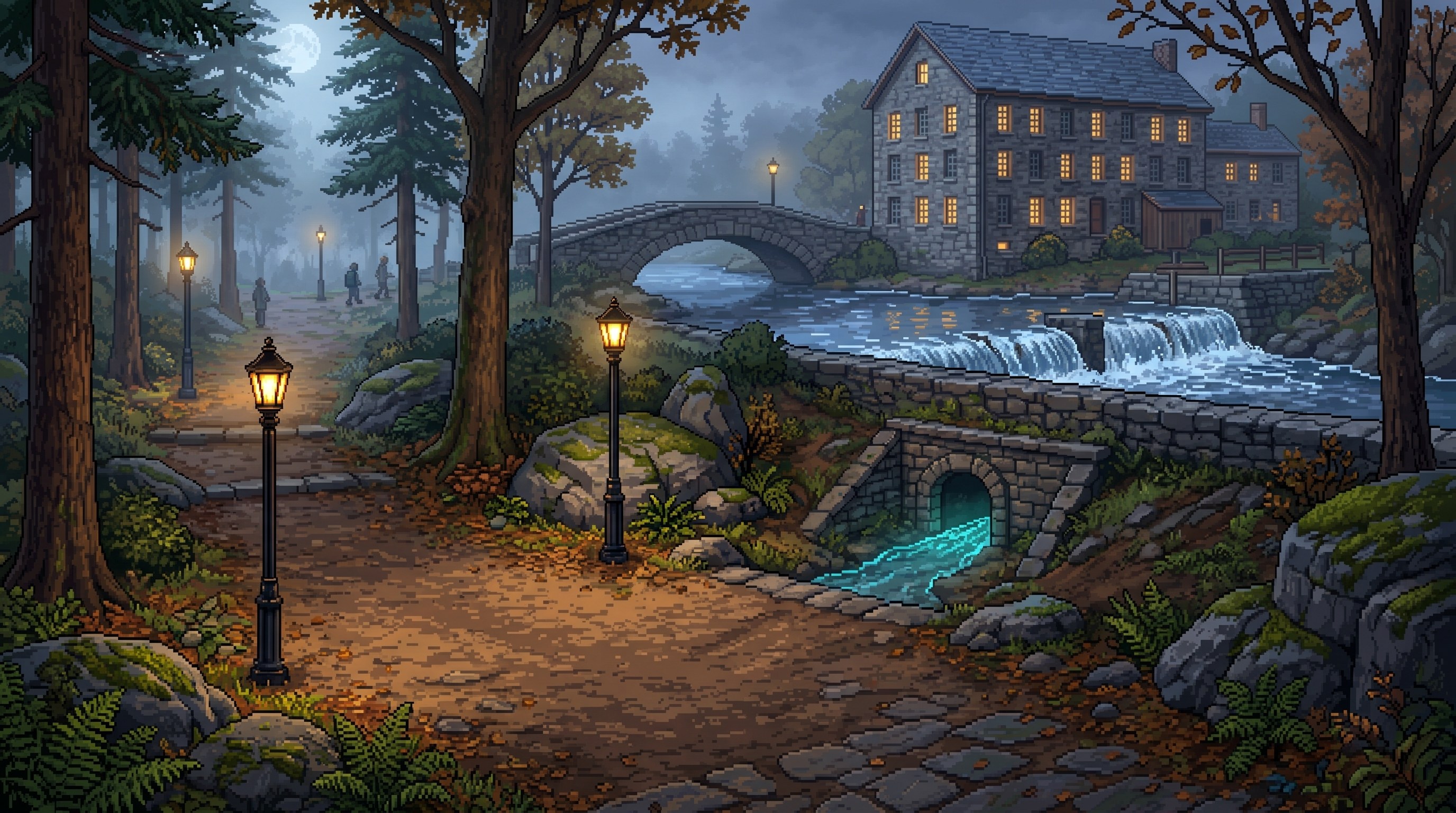 ATrailhead
BStone culvert
CEncounter
Getty Square gameplay · exploration through battle
This capture comes directly from the playable browser prototype above: Mara follows the clue, inspects the storm drain, uses Ward and Strike, survives the enemy turns, and clears the square.
Next-step mockup · exploration mode
The world stays large and readable. Party condition sits on the left, the current lead stays at the top, nearby actions appear only when useful, and a compact command strip anchors the bottom. This mockup established the visual target now tested in the live prototype above.
Inspect the storm drain near the clock island.
The HUD uses the edges, leaving the streets and landmarks visible.
Health and role are visible without opening a separate character screen.
Prompts appear close to the active clue instead of filling the screen.
The same command strip can swap keyboard keys for gamepad buttons.
Gameplay mockup · turn-based combat
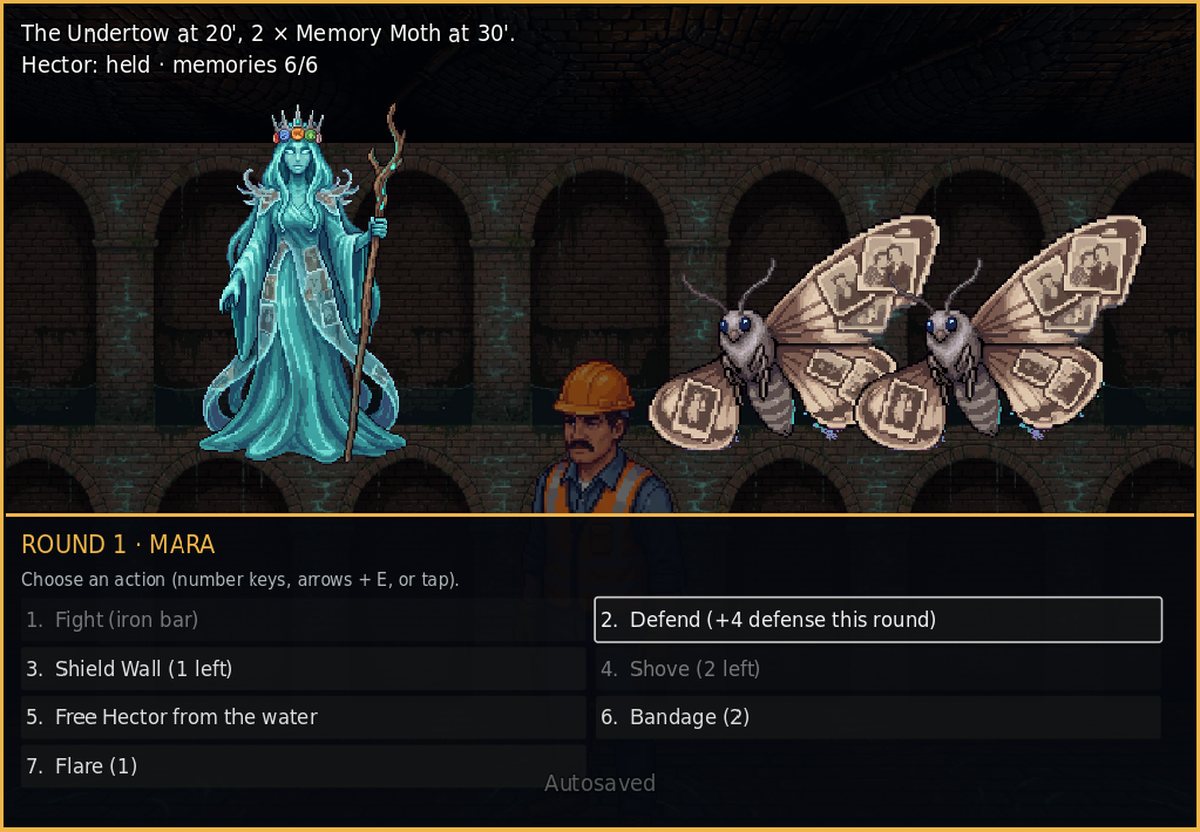
Combat begins in place—no separate arena and no camera cut. The player can read turn order, movement, cover, hit chance, and ability cost while Getty Square remains visible underneath.
Initiative and the active character are visible without opening another panel.
Hit chance, damage range, cover, and action cost appear before confirmation.
Movement, shoves, cover, and chokepoints matter more than visual spectacle.
The exploration street remains intact, so every landmark becomes tactical terrain.
The premise
You assemble a four-person party, follow leads through familiar neighborhoods, and discover a supernatural underworld threaded through apartment buildings, parks, train stations, and service tunnels. Exploration and conversation shift into turn-based, grid-based combat when trouble finds you.
Representative artwork · reference-informed second pass
This revised visual target starts from Getty Square's real five-way street geometry and defining landmarks: the triangular clock island, 20 South Broadway, the City Hall tower, dense storefronts, and black streetlamps. Business names are deliberately fictionalized.
Starting hub · full district plan
Recognizable geography, handcrafted for dense play instead of copied block for block.
Arrival, party check, safe-house contact
Fictional storefronts, rumors, first lead
Landmark silhouette and orientation point
Daylighted river, clues, waterfront route
Tutorial dungeon beneath the square
30–45 minute vertical slice
A transit worker disappears after reporting running water where no pipe should be. The party follows a trail from the square into a sealed service space, then decides whether to destroy, bind, or bargain with what they find.
Top-down pixel-art districts built from reusable street, storefront, transit, river, and tunnel tiles.
Skill checks create complications and alternate routes. Failure moves the story instead of stopping it.
Readable d20-inspired tactics with movement, cover, visible hit chances, and signature abilities.
Walk within districts; use subway, Metro-North, buses, taxis, and later supernatural routes between them.
Built to stay focused
5exploration screens
4party members
2combat encounters
3noncombat resolutions
Project assets
These are the current deliverables. The browser prototype above is a short interaction test; the playable Godot chapter is available in classic and first-person views through Play the chapter.